Cardiomegaly and Granuloma
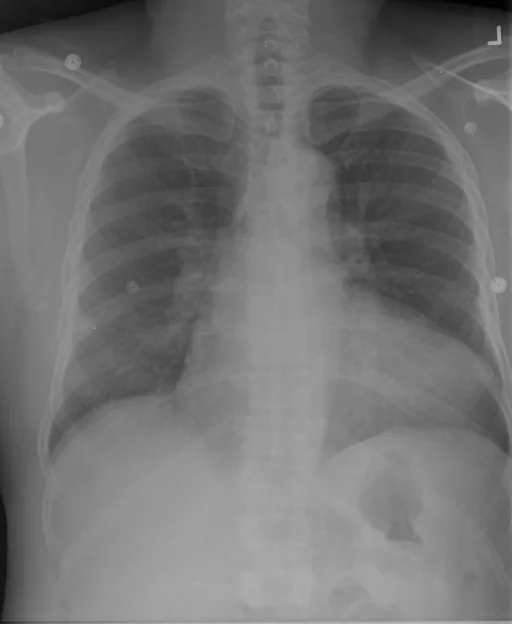
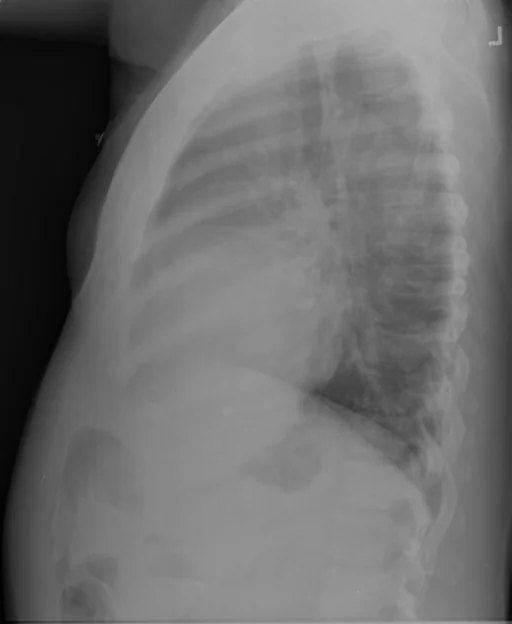
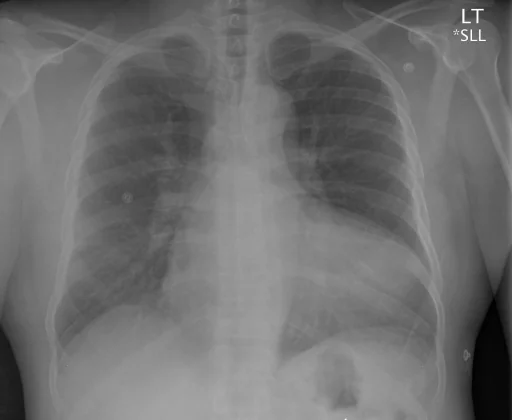
What does this chest radiograph show?
This chest radiograph is indexed in the Indiana University Chest X-ray Collection under “Cardiomegaly and Granuloma / Granulomatous Disease”. The principal recorded finding is “Cardiomegaly”, and the case status is documented as “Active or unspecified chronicity”. Recorded descriptors for this case include laterality Right. The structured record behind this page carries two indexed terms; in the source report text, a findings section, an impression and a comparison study are all present. The study comprises 3 views.
This summary is composed from the collection's structured annotation fields, and is not a description of the image.
- Involvement site: Right
- Diagnostic category: Cardiomegaly and Granuloma / Granulomatous Disease
- Imaging coverage: 3 views, native resolution 512x624 pixels
- Related keywords: Cardiomegaly, Granuloma / Granulomatous Disease, Calcified Granuloma, Lung, Base and Right
Radiologist's Diagnostic Impression (analytical summary)
Recorded findings: Cardiomegaly, Granuloma and Calcified Granuloma (Lung, Base, Right). Categories: “Cardiomegaly and Granuloma / Granulomatous Disease”. Status: “Active or unspecified chronicity”.
Case Radiographs (3 Views)
Radiographic Study Specifications
- Case Number
- CXR 1459
- Modality
- Chest Radiography (X-Ray)
- Views
- 3 images
- Clinical Status
- Active or unspecified chronicity
Primary Clinical Report (verbatim source text - NoDerivatives)
- Indication
- Adult male shortness of breath.
- Comparison
- Two-view chest radiograph.
- Findings
- No stable cardiomegaly, without focal consolidation, pneumothorax, or pleural effusion. Stable right basilar calcified granuloma. No acute osseous abnormality identified.
- Impression
- Stable cardiomegaly without acute cardiopulmonary abnormality.
Related Radiology Cases
Source, Scientific Provenance and Licence
Indiana University Chest X-ray Collection · Open-i / U.S. National Library of Medicine · CC BY-NC-ND 4.0
Licence: CC BY-NC-ND 4.0
Primary Data Source: https://openi.nlm.nih.gov/