PANK 2 (Hallervorden-Spatz) PKAN (Pantothenate Kinase Associated Neurodegeneration)
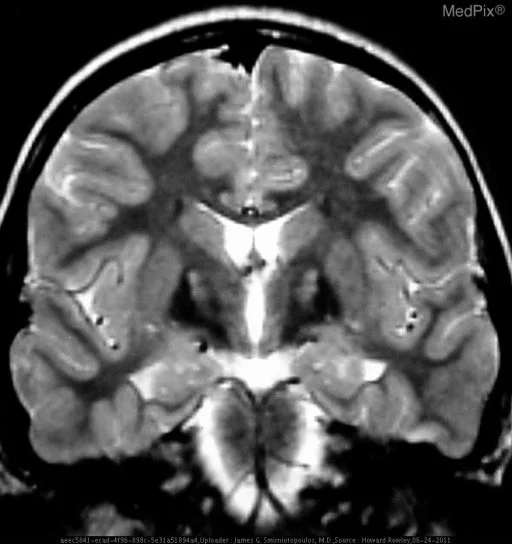
Patient Presentation & Demographics
Clinical History & Presentation: Patient presented with characteristic clinical findings consistent with suspected PANK 2 (Hallervorden-Spatz) PKAN (Pantothenate Kinase Associated Neurodegeneration). Multimodal diagnostic imaging was performed to characterize anatomic involvement and guide therapeutic management.
Systematic Imaging Findings
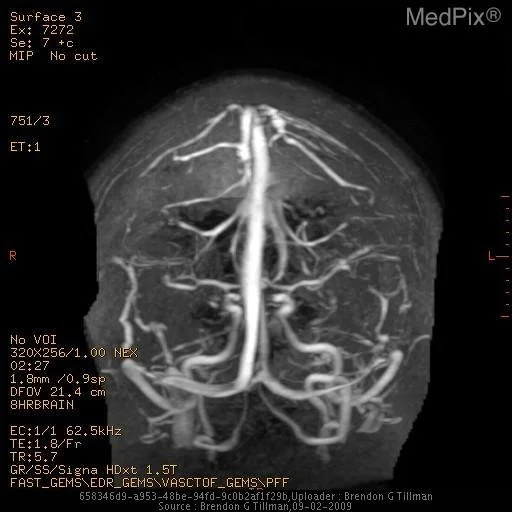
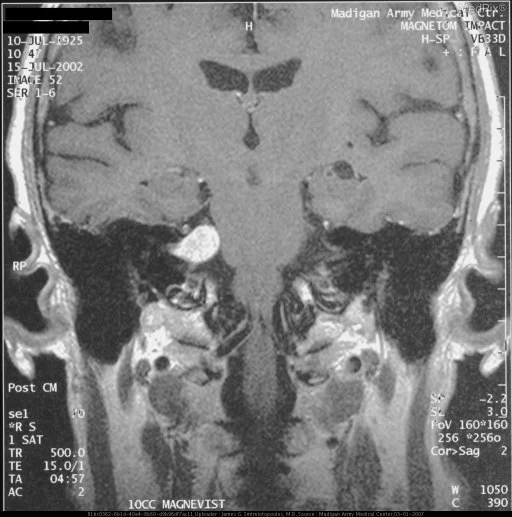
Modality & Anatomic Assessment (Magnetic Resonance Imaging (MRI)): High-resolution head and neck imaging systematically analyzes skull base osseous architecture, paranasal sinus aeration, mucosal thickness, orbital contents, deep facial fascial spaces, salivary glands, and cervical lymph node chains for pathologic enlargement or necrotic foci. Key Observational Findings: Classic 'eye of the tiger' appearance of PANK: hypointensity of the globus pallidus from iron deposition, with a medial hyper intensity. PMID: 16775270 PMID: 12510040 The basal ganglia appear remarkably normal on T1-weighted images.
Challenge: What Is the Primary Diagnosis?
Evaluate the patient presentation, systematic radiologic findings, and multi-frame imaging series above. Test your clinical reasoning before revealing the definitive diagnosis, hallmark differential criteria, and board pearls.
PANK 2 (Hallervorden-Spatz) PKAN (Pantothenate Kinase Associated Neurodegeneration)
Differential Diagnosis (DDx) • Key Clinical Hallmarks
Vestibular Schwannoma
Distinguishing Radiologic Hallmark: Centrally necrotic or solid mass expanding the cerebellopontine angle with cone-shaped widening of the internal auditory canal (ice-cream cone sign).
Skull Base Meningioma
Distinguishing Radiologic Hallmark: Broad-based extra-axial dural mass showing homogeneous avid enhancement, adjacent hyperostosis, and classic dural tail sign.
Middle Ear Cholesteatoma
Distinguishing Radiologic Hallmark: Soft tissue mass within Prussak's space or epitympanum demonstrating non-dependent ossicular chain erosion and blunting of the scutum.
Nasopharyngeal Carcinoma
Distinguishing Radiologic Hallmark: Soft tissue asymmetry filling the fossa of Rosenmuller with deep parapharyngeal space invasion and retropharyngeal lymphadenopathy.
High-Yield Clinical Pearls & Management Guidelines
Scutum blunting and erosion on high-resolution bone algorithm temporal bone CT is pathognomonic for middle ear cholesteatoma arising from Prussak's space. In cerebellopontine angle lesions, an "ice-cream cone" deformity of the internal auditory canal points directly to vestibular schwannoma, whereas broad dural attachment with hyperostosis favors skull base meningioma. ACR Communication Urgency: Tier 2.