Ulcerative colitis
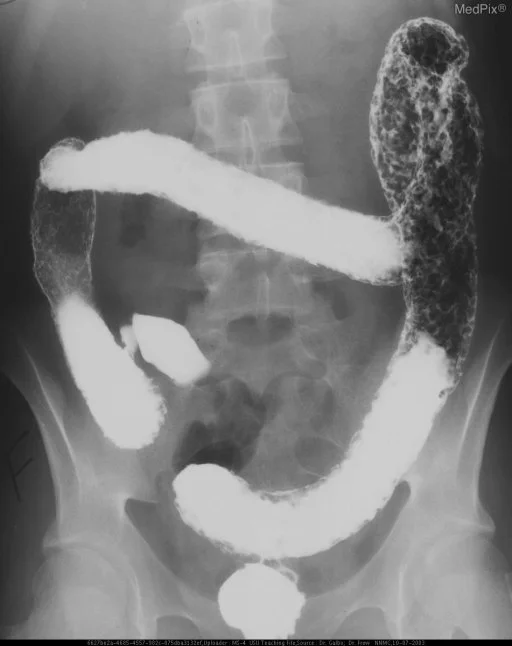
Patient Presentation & Demographics
Clinical History & Presentation: Patient presented with characteristic clinical findings consistent with suspected Ulcerative colitis. Multimodal diagnostic imaging was performed to characterize anatomic involvement and guide therapeutic management.
Systematic Imaging Findings
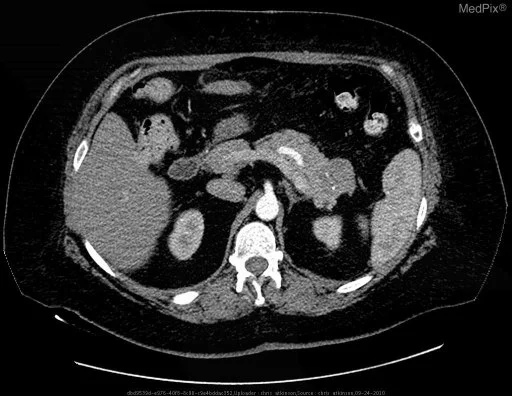
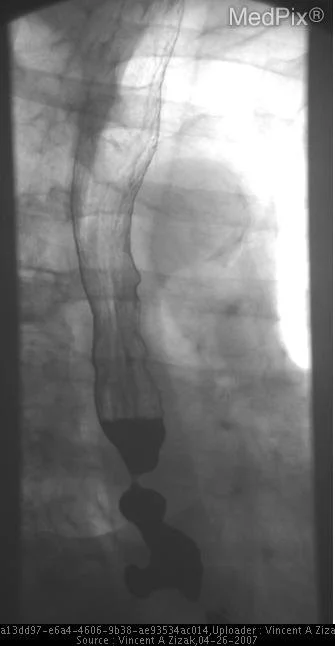
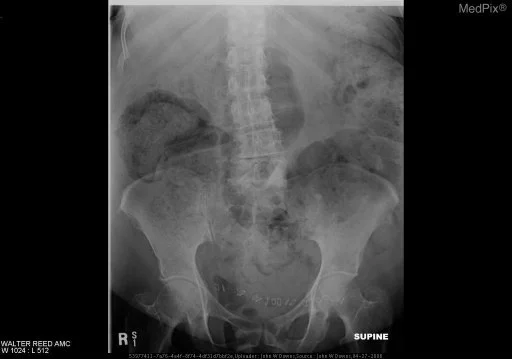
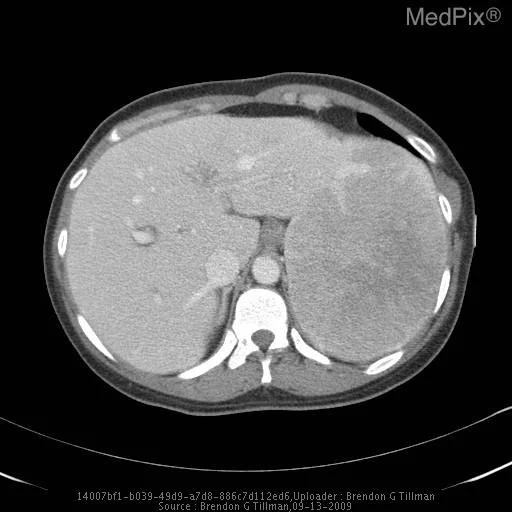
Modality & Anatomic Assessment (Fluoroscopy): Abdominopelvic imaging systematically interrogates bowel loop caliber, mural thickness, mucosal enhancement patterns, mesenteric fat stranding, and peritoneal fluid. Solid abdominal viscera (liver, pancreas, spleen, gallbladder) are assessed for focal lesions, parenchymal perfusion defects, and biliary ductal dilatation. Key Observational Findings: Double contrast barium enema with prone and supine views indicating shortening of the colon and loss of haustral folds mimicking a lead pipe. Areas of ulceration of the mucosa are seen from rectum to cecum, they are continuous and become less prominent proximally. Contrast is seen passing through the ileocecal valve. The appendix was not seen.
Challenge: What Is the Primary Diagnosis?
Evaluate the patient presentation, systematic radiologic findings, and multi-frame imaging series above. Test your clinical reasoning before revealing the definitive diagnosis, hallmark differential criteria, and board pearls.
Ulcerative colitis
Differential Diagnosis (DDx) • Key Clinical Hallmarks
Closed-Loop Small Bowel Obstruction
Distinguishing Radiologic Hallmark: Two adjacent transition points with mesenteric vascular engorgement, bowel wall thickening, and impending ischemic compromise.
Active Crohn Disease
Distinguishing Radiologic Hallmark: Transmural bowel wall hyperenhancement, mucosal ulceration, comb sign (mesenteric hypervascularity), and fibrofatty creeping fat proliferation.
Mesenteric Ischemia
Distinguishing Radiologic Hallmark: Marked bowel wall thinning or pneumatosis intestinalis with portomesenteric venous gas and absent mucosal contrast enhancement.
Severe Ulcerative Colitis
Distinguishing Radiologic Hallmark: Continuous, symmetric colonic mucosal thickening extending proximally from the rectum with loss of haustration (lead-pipe appearance).
High-Yield Clinical Pearls & Management Guidelines
In mechanical small bowel obstruction (SBO), the mesenteric "whirl sign" indicates volvulus or closed-loop strangulation requiring emergent surgical laparotomy. The bowel wall "target" or "halo" sign reflects marked submucosal edema characteristic of acute ischemia or severe enteritis. ACR Communication Urgency: Tier 1 for closed-loop obstruction or perforation, Tier 2 for uncomplicated SBO.