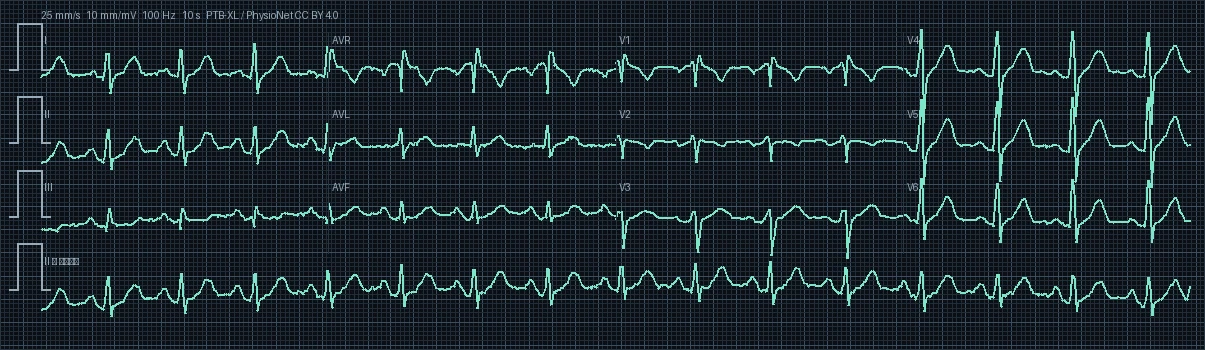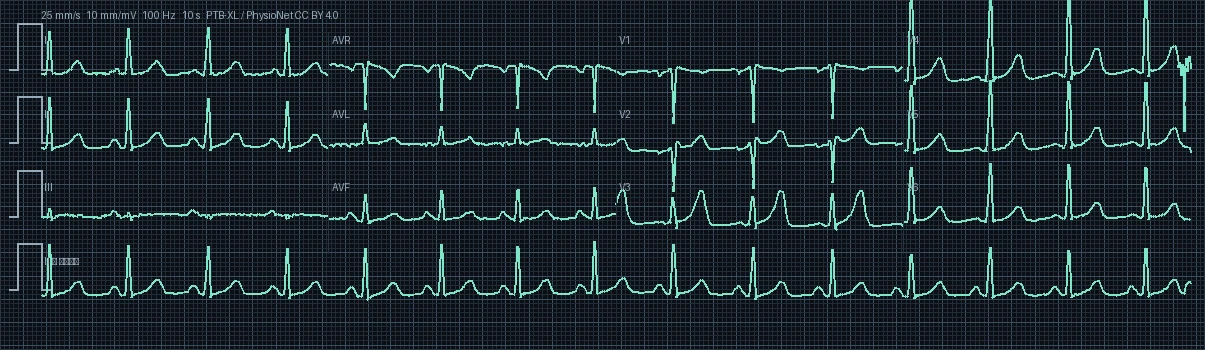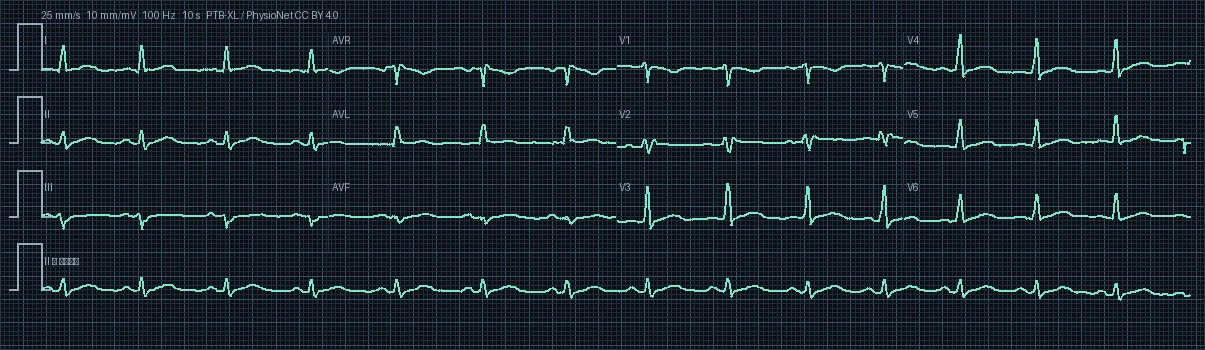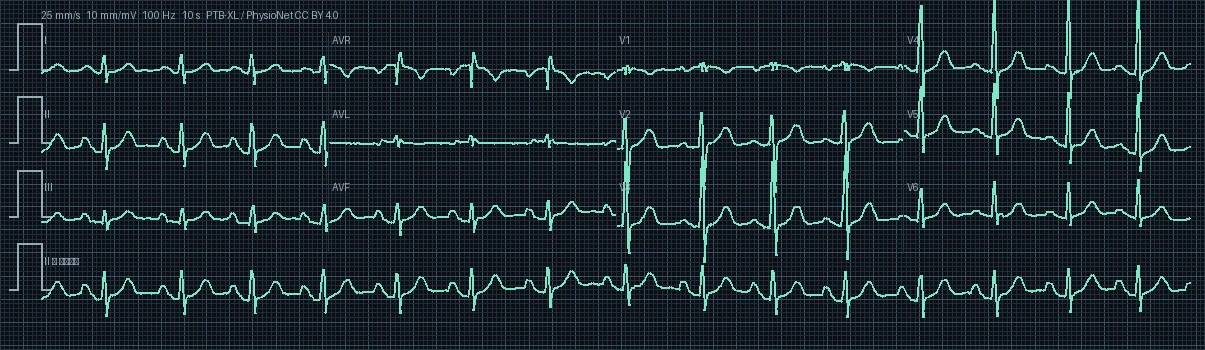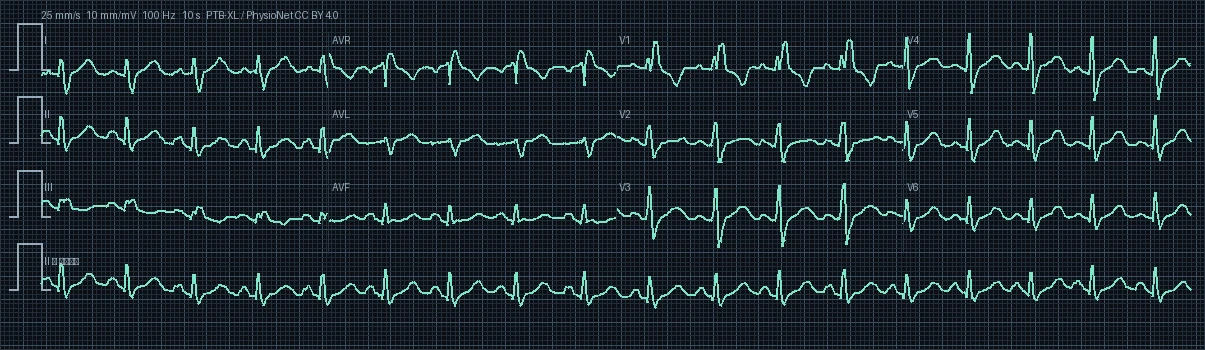
ECG #1466 — Incomplete right bundle branch block

PTB-XL Record #01466 · 12-Lead Diagnostic Electrocardiogram · 500 Hz High-Resolution

12-Lead Electrocardiogram Preview #1466
Target Territory: Incomplete Right Bundle Delay
I II III aVR aVL aVF V1 V2 V3 V4 V5 V6
Heart Rate
107.1 bpm
PR Interval
130 ms
QRS Duration
140 ms
QTc (Bazett)
481.1 ms
Frontal QRS Axis
-164.1° (Indeterminate / Extreme)
Demographics
41 yrs · Female

Clinical Direct Answer

The primary diagnostic finding on this 12-lead electrocardiogram is incomplete right bundle branch block, recorded with an underlying rhythm of sinus rhythm at a rate of 107.1 beats per minute (tachycardia). Pathological waveform alterations are predominantly localized to target territory leads, requiring prompt clinical correlation, serial biomarkers, and targeted electrophysiological evaluation.

Comprehensive 7-Step Electrophysiological Interpretation

1

Rhythm & Pacemaker Origin

The tracing exhibits Sinus Tachycardia with preserved regular rhythmicity and 1:1 AV association. Impulse formation originates in the sinoatrial node driven by enhanced sympathetic adrenergic tone or physiologic stress. Uniform upright P waves consistently precede each QRS complex.
2

Ventricular Rate & Regularity

The resting ventricular heart rate is quantified at 107.1 beats per minute (bpm) with a median R-R interval of 560 ms. This rate is exceeding 100 bpm, categorizing this record as sinus tachycardia, which attenuates coronary perfusion time during shortened diastole.

3

Frontal Plane QRS Axis & Vector Analysis

The mean frontal plane QRS electrical axis is calculated at -164.1° (Extreme / Northwest Axis). Extreme axis deviation (-90° to -180° / +180° to +270°), frequently encountered in ventricular rhythms, severe cardiomyopathy, or limb electrode misplacement.

4

Conduction Intervals & Chamber Timing (PR, QRS, QT/QTc)

Electrophysiologic interval analysis: PR interval is normal at 130 ms (normal range 120-200 ms), confirming physiological transmission velocity across the atrioventricular node. QRS duration is prolonged at 140 ms (wide QRS ≥120 ms), indicating delayed intraventricular conduction secondary to bundle branch block or ectopic origin. Bazett-corrected QTc (QTc = QT / √RR) is prolonged at 481.1 ms above the gender-adjusted normal threshold for females (460 ms), warranting clinical surveillance for polymorphic ventricular tachycardia and electrolyte evaluation.

5

Waveform Morphology & ST-T Segment Dynamics

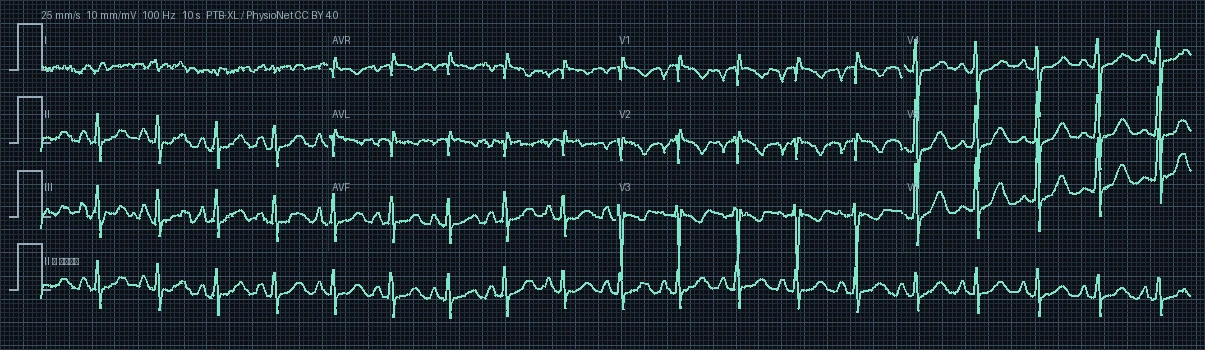
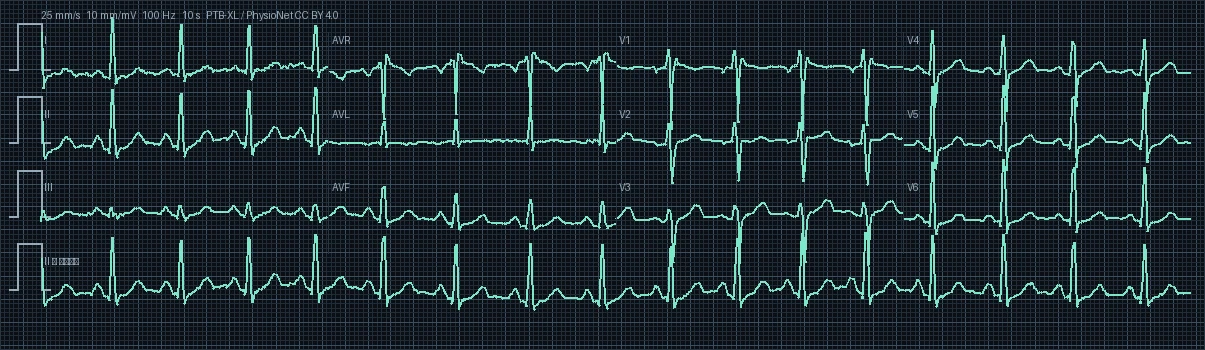
Precordial and frontal QRS morphology reveals diagnostic bundle branch delay (incomplete right bundle branch block). Notched wide QRS deflections coupled with secondary ST-segment and T-wave repolarization discordance reflect sequential rather than simultaneous biventricular depolarization.

6

Clinical Correlation & Pathophysiological Significance

Biophysical clinical correlation: In this 41-year-old female patient, electrocardiographic parameters must be framed within adult cardiovascular risk profiles (hypertension, metabolic profile, and lifestyle); intact intervals and isoelectric baselines reflect resting myocardial stability. Furthermore, calculated QTc intervals and resting heart rate closely align with metabolic perfusion demands for this demographic group.

7

Differential Diagnosis & Recommended Diagnostic Workup

Key differential diagnoses include: 1. Ventricular Paced Rhythm 2. Wolff-Parkinson-White pre-excitation syndrome (short PR with delta wave) 3. Ventricular Tachycardia 4. Non-specific intraventricular conduction delay (IVCD) 5. Sodium-channel blocker toxicity.

Interactive 12-Lead Signal & Digital Caliper

Select individual leads to examine high-resolution waveforms and measure precise intervals in milliseconds.

Click two points on the tracing to measure interval
Clinical & Educational Notice: This electrocardiogram analysis is generated from the PTB-XL open clinical cohort for educational, reference, and computational research purposes. It does not replace individualized bedside clinical evaluation, emergency triage, or formal cardiologist consultation.